Category: History

I love history!

  • Why all the Cossack hate?

    I’m watching Jack Frost (1979), and in this movie, the main villain is portrayed as a Cossack. It has made me question the portrayal of Cossacks as villains. Weren’t Cossacks considered good guys? I mean, literally good guys? This isn’t the first time I’ve noticed media from the 60s and 70s depicting Cossacks in a negative light. I understand that this period coincided with the Cold War, but instead of simply criticizing Russians, why did they specifically target a relatively small and lesser-known group like the Cossacks? Was it due to ignorance, with Hollywood finding the name ‘Cossack’ appealing, or was there another reason behind it?

    One possible explanation could be the Cossacks’ resistance against the Bolsheviks. It can be argued that the defeat of the Cossacks and the White Russian Army by the Red Russian Army directly contributed to the Holodomor famine and the tragic loss of up to 10 million Ukrainian lives.

    A couple of takeaway points from Wikipedia about the Cossacks – 

    “The Cossacks[a] are a group of predominantly East Slavic Orthodox Christian people who became known as members of democratic, self-governing, semi-military communities originating in the steppes of Eastern Europe (in particular the Dnieper, in the Wild Fields).[1] They inhabited sparsely populated areas and islands in the lower Dnieper,[2] DonTerek, and Ural river basins, and played an important role in the historical and cultural development of both Ukraine and Russia.[3][4]

    https://en.wikipedia.org/wiki/Cossacks

    By the 18th century, Cossack hosts in the Russian Empire occupied effective buffer zones on its borders. The expansionist ambitions of the Empire relied on ensuring Cossack loyalty, which caused tension given their traditional exercise of freedom, democracy, self-rule, and independence. Cossacks such as Stenka RazinKondraty BulavinIvan Mazepa, and Yemelyan Pugachev led major anti-imperial wars and revolutions in the Empire in order to abolish slavery and harsh bureaucracy and to maintain independence. The empire responded with executions and tortures, the destruction of the western part of the Don Cossack Host during the Bulavin Rebellion in 1707–1708, the destruction of Baturyn after Mazepa’s rebellion in 1708,[b] and the formal dissolution of the Lower Dnieper Zaporozhian Host after Pugachev’s Rebellion in 1775. 

    https://en.wikipedia.org/wiki/Cossacks

    During the Russian Civil WarDon and Kuban Cossacks were the first people to declare open war against the Bolsheviks. In 1918, Russian Cossacks declared their complete independence, creating two independent states: the Don Republic and the Kuban People’s Republic, and the Ukrainian State emerged. Cossack troops formed the effective core of the anti-Bolshevik White Army, and Cossack republics became centers for the anti-Bolshevik White movement. With the victory of the Red Army, Cossack lands were subjected to decossackization and the Holodomor famine. As a result, during the Second World War, their loyalties were divided and both sides had Cossacks fighting in their ranks.

    https://en.wikipedia.org/wiki/Cossacks

    Side note – “Zaporozhian Cossacks write to the Sultan of Turkey” by Ilya Repin is one of my favorite pieces of art.

    “Zaporozhian Cossacks write to the Sultan of Turkey” by Ilya Repin (1844–1930)

  • On the 400th Thanksgiving.

    The First Thanksgiving, 1621

    This is the 400th anniversary of the first Thanksgiving festival in the new world. Our ancestors landed here in 1620 and celebrated their first successful harvest in 1621.

    Jean Leon Gerome Ferris (August 8, 1863 – March 18, 1930) was an best known for his series of 78 scenes from , entitled The Pageant of a Nation, the largest series of American historical paintings by a single artist.

  • It is not the critic who counts.

    “It is not the critic who counts; not the man who points out how the strong man stumbles, or where the doer of deeds could have done them better. The credit belongs to the man who is actually in the arena, whose face is marred by dust and sweat and blood; who strives valiantly; who errs, who comes short again and again, because there is no effort without error and shortcoming; but who does actually strive to do the deeds; who knows great enthusiasms, the great devotions; who spends himself in a worthy cause; who at the best knows in the end the triumph of high achievement, and who at the worst, if he fails, at least fails while daring greatly, so that his place shall never be with those cold and timid souls who neither know victory nor defeat.”

  • Happy 433st birthday to Virginia Dare!

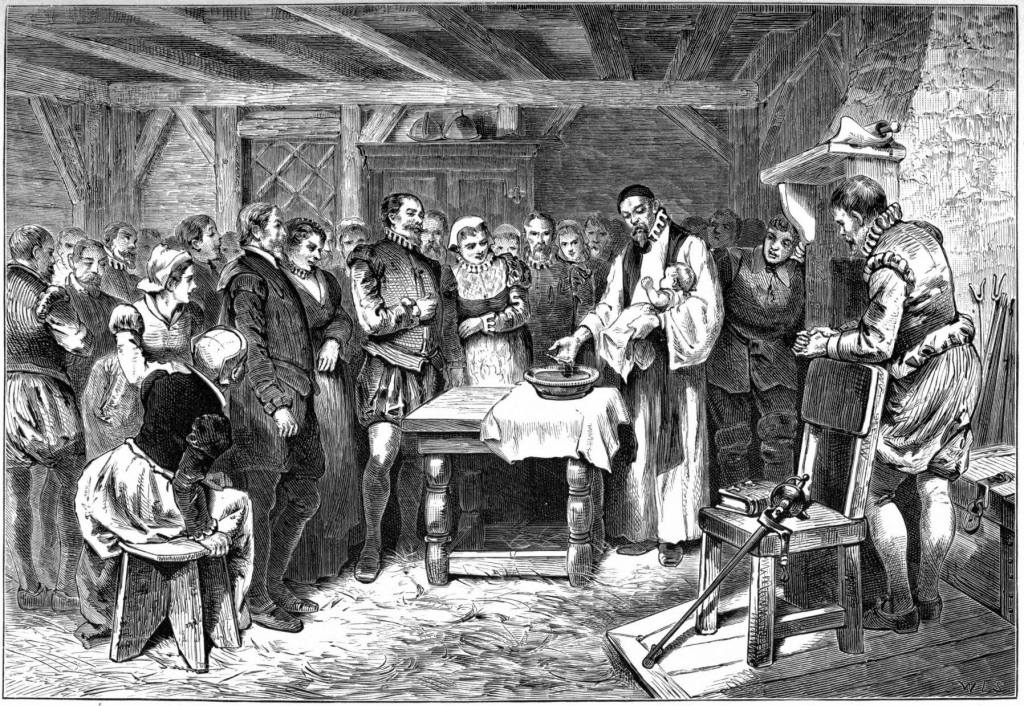
    Virginia Dare (born August 18, 1587, date of death unknown) was the first English child born in a New World English overseas possession, and was named after the territory of Virginia, her birthplace. Her parents were Ananias Dare and Eleanor White (also spelled Ellinor or Elyonor).

  • Apollo 11

    One of mankind’s greatest accomplishments happened 51 years ago.

    Apollo 11 was the spaceflight that first landed humans on the Moon. Commander Neil Armstrong and lunar module pilot Buzz Aldrin formed the American crew that landed the Apollo Lunar Module Eagle on July 20, 1969, at 20:17 UTC. Armstrong became the first person to step onto the lunar surface six hours and 39 minutes later on July 21 at 02:56 UTC; Aldrin joined him 19 minutes later. They spent about two and a quarter hours together outside the spacecraft, and they collected 47.5 pounds (21.5 kg) of lunar material to bring back to Earth. Command module pilot Michael Collins flew the Command Module Columbia alone in lunar orbit while they were on the Moon’s surface. Armstrong and Aldrin spent 21 hours, 36 minutes on the lunar surface at a site they named Tranquility Base before lifting off to rejoin Columbia in lunar orbit.

    Wikipedia
    Left to right: Neil Armstrong, Michael Collins, Buzz Aldrin

    Thank you to the genius of Wernher von Braun, the chief architect of the Saturn V super heavy-lift launch vehicle that propelled the Apollo spacecraft to the Moon. Wernher Magnus Maximilian Freiherr von Braun (March 23, 1912 – June 16, 1977) was a German–born American aerospace engineer and space architect. In 1967, von Braun was inducted into the National Academy of Engineering, and in 1975, he received the National Medal of Science. He advocated a human mission to Mars.

    Wikipedia

    Sadly we’ve focused our efforts not on reaching Mars but rather on less fruitful endeavors for the past 50 years.

    Wernher von Braun

  • Happy Birthday, Julius Caesar.

    Happy Birthday, Julius Caesar.

    Julius Caesar, in full Gaius Julius Caesar, (born July 12/13, 100? BCE, Rome [Italy]—died March 15, 44 BCE, Rome), celebrated Roman general and statesman, the conqueror of Gaul (58–50 BCE), victor in the civil war of 49–45 BCE, and dictator (46–44 BCE), who was launching a series of political and social reforms when he was assassinated by a group of nobles in the Senate House on the Ides of March.

    Caesar changed the course of the history of the Greco-Roman world decisively and irreversibly. The Greco-Roman society has been extinct for so long that most of the names of its great men mean little to the average, educated modern person. But Caesar’s name, like Alexander’s, is still on people’s lips throughout the Christian and Islamic worlds. Even people who know nothing of Caesar as a historic personality are familiar with his family name as a title signifying a ruler who is in some sense uniquely supreme or paramount—the meaning of Kaiser in German, tsar in the Slavonic languages, and qayṣar in the languages of the Islamic world.

    Source – https://www.britannica.com/biography/Julius-Caesar-Roman-ruler

  • Charles Lindbergh, Hero

    March, 21 1928 – President Calvin Coolidge presents the Congressional Medal of Honor to Charles Lindbergh, a captain in the US Army Air Corps Reserve, for making the first solo trans-Atlantic flight. On June 11, 1927, Lindbergh had received the first Distinguished Flying Cross ever awarded.

  • Lewis and Clark

    On this day, 24 November 1805, Lewis and Clark reach Pacific Ocean, 1st Americans to cross continent.

    >The Lewis and Clark Expedition, also known as the Corps of Discovery Expedition, was the first American expedition to cross what is now the western portion of the United States, departing in May 1804, from near St. Louis making their way westward through the continental divide to the Pacific coast.

    >The expedition was commissioned by President Thomas Jefferson shortly after the Louisiana Purchase in 1803, consisting of a select group of U.S. Army volunteers under the command of Captain Meriwether Lewis and his close friend, Second Lieutenant William Clark. Their perilous journey lasted from May 1804 to September 1806. The primary objective was to explore and map the newly acquired territory, find a practical route across the Western half of the continent, and establish an American presence in this territory before Britain and other European powers tried to claim it.

    >The campaign’s secondary objectives were scientific and economic: to study the area’s plants, animal life, and geography, and establish trade with local Native American tribes. With maps, sketches, and journals in hand, the expedition returned to St. Louis to report their findings to Jefferson. Via Wikipedia.