
Tag: George Washington

  • Braddock’s Defeat: When Empire Met the Wilderness

    Braddock’s Defeat: When Empire Met the Wilderness

    On July 9, 1755, a British army marched through the Pennsylvania wilderness toward Fort Duquesne. It carried the confidence of empire; discipline, order, and certainty.

    By day’s end, that certainty was shattered.

    Major General Edward Braddock led about 1,400 men, including a young George Washington, to seize the fort and secure the frontier. About ten miles from their goal, French, Canadian, and Native forces attacked.

    The result was Braddock’s Defeat.

    The British army was overwhelmed in the woods, where traditional formations failed. The battle lasted hours and ended in near destruction. Braddock was mortally wounded and died during the retreat. British casualties reached 977, while French and Native losses were only 39.

    The lesson was clear. Braddock embodied old-world confidence, rank, training, and imperial power. But the American frontier was different. The wilderness exposed the limits of formal strength without practical understanding.

    Braddock was not a fool. He was brave and died doing his duty. But courage could not overcome a failure to adapt.

    And then there was Washington.

    At twenty-three, he was still learning. He had already faced defeat at Fort Necessity. Now he witnessed a British army collapse. He survived, helped organize the retreat, and emerged with hard-earned experience.

    His survival invites reflection. Horses were shot from under him. Bullets tore through his clothing. Yet he lived, while many others did not.

    Washington learned that British power could fail, that America was not Europe, and that survival required more than inherited authority.

    Twenty-one years later, he would face the British again, this time as their enemy.

    Braddock’s Defeat was not the Revolution, but it helped shape it. It revealed the limits of empire and formed leaders like Washington through hardship and failure.

    Before victory, defeat. Before command, apprenticeship.

    Braddock entered the wilderness with imperial confidence. Washington left with something more valuable: experience.

    July 9, 1755 was a disaster for Britain, but also a moment where failure became formation.
  • George Washington’s 1789 Thanksgiving Proclamation

    By the President of the United States of America, a Proclamation.

    Whereas it is the duty of all Nations to acknowledge the providence of Almighty God, to obey his will, to be grateful for his benefits, and humbly to implore his protection and favor– and whereas both Houses of Congress have by their joint Committee requested me to recommend to the People of the United States a day of public thanksgiving and prayer to be observed by acknowledging with grateful hearts the many signal favors of Almighty God especially by affording them an opportunity peaceably to establish a form of government for their safety and happiness.

    Now therefore I do recommend and assign Thursday the 26th day of November next to be devoted by the People of these States to the service of that great and glorious Being, who is the beneficent Author of all the good that was, that is, or that will be– That we may then all unite in rendering unto him our sincere and humble thanks–for his kind care and protection of the People of this Country previous to their becoming a Nation–for the signal and manifold mercies, and the favorable interpositions of his Providence which we experienced in the course and conclusion of the late war–for the great degree of tranquility, union, and plenty, which we have since enjoyed–for the peaceable and rational manner, in which we have been enabled to establish constitutions of government for our safety and happiness, and particularly the national One now lately instituted–for the civil and religious liberty with which we are blessed; and the means we have of acquiring and diffusing useful knowledge; and in general for all the great and various favors which he hath been pleased to confer upon us.

    And also that we may then unite in most humbly offering our prayers and supplications to the great Lord and Ruler of Nations and beseech him to pardon our national and other transgressions– to enable us all, whether in public or private stations, to perform our several and relative duties properly and punctually–to render our national government a blessing to all the people, by constantly being a Government of wise, just, and constitutional laws, discreetly and faithfully executed and obeyed–to protect and guide all Sovereigns and Nations (especially such as have shewn kindness unto us) and to bless them with good government, peace, and concord–To promote the knowledge and practice of true religion and virtue, and the encrease of science among them and us–and generally to grant unto all Mankind such a degree of temporal prosperity as he alone knows to be best.

    Given under my hand at the City of New York the third day of October in the year of our Lord 1789.

    Go. Washington

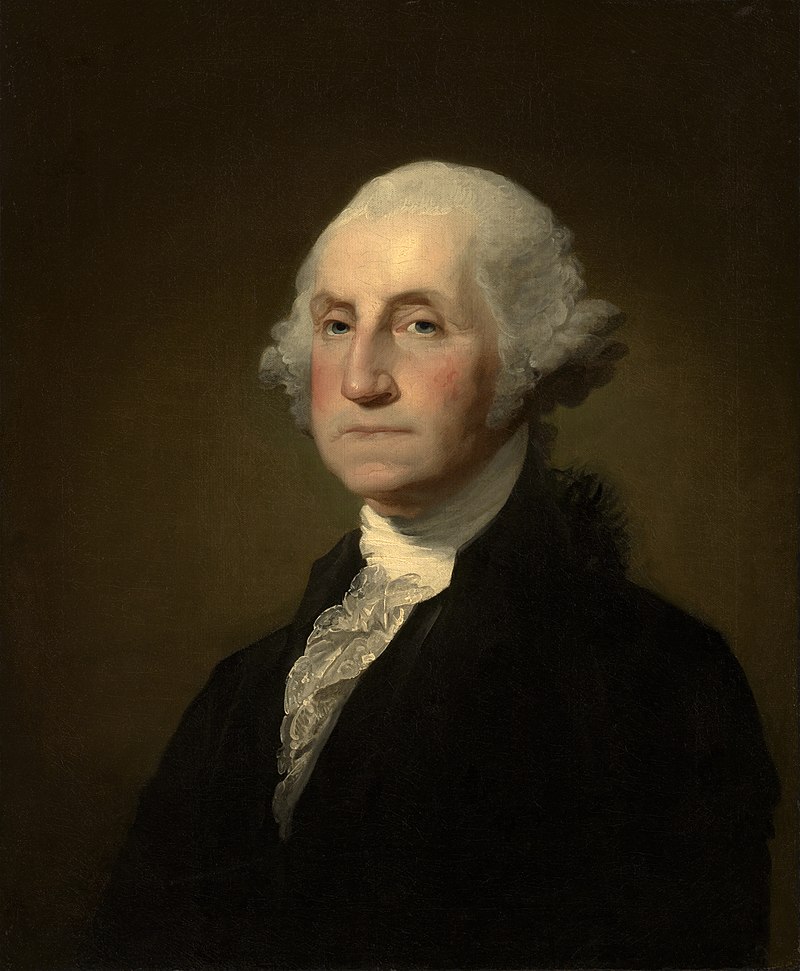
    Gilbert Stuart Williamstown Portrait of George Washington.jpg

    Gilbert Stuart – http://www.clarkart.edu/Collection/7577
  • George Washington’s Thanksgiving Proclamation

    Thanksgiving Proclamation

    [New York, 3 October 1789]

    By the President of the United States of America. a Proclamation.

    Whereas it is the duty of all Nations to acknowledge the providence of Almighty God, to obey his will, to be grateful for his benefits, and humbly to implore his protection and favor—and whereas both Houses of Congress have by their joint Committee requested me “to recommend to the People of the United States a day of public thanksgiving and prayer to be observed by acknowledging with grateful hearts the many signal favors of Almighty God especially by affording them an opportunity peaceably to establish a form of government for their safety and happiness.”

    Now therefore I do recommend and assign Thursday the 26th day of November next to be devoted by the People of these States to the service of that great and glorious Being, who is the beneficent Author of all the good that was, that is, or that will be—That we may then all unite in rendering unto him our sincere and humble thanks—for his kind care and protection of the People of this Country previous to their becoming a Nation—for the signal and manifold mercies, and the favorable interpositions of his Providence which we experienced in the course and conclusion of the late war—for the great degree of tranquillity, union, and plenty, which we have since enjoyed—for the peaceable and rational manner, in which we have been enabled to establish constitutions of government for our safety and happiness, and particularly the national One now lately instituted—for the civil and religious liberty with which we are blessed; and the means we have of acquiring and diffusing useful knowledge; and in general for all the great and various favors which he hath been pleased to confer upon us.

    and also that we may then unite in most humbly offering our prayers and supplications to the great Lord and Ruler of Nations and beseech him to pardon our national and other transgressions—to enable us all, whether in public or private stations, to perform our several and relative duties properly and punctually—to render our national government a blessing to all the people, by constantly being a Government of wise, just, and constitutional laws, discreetly and faithfully executed and obeyed—to protect and guide all Sovereigns and Nations (especially such as have shewn kindness unto us) and to bless them with good government, peace, and concord—To promote the knowledge and practice of true religion and virtue, and the encrease of science among them and us—and generally to grant unto all Mankind such a degree of temporal prosperity as he alone knows to be best.

    Given under my hand at the City of New-York the third day of October in the year of our Lord 1789.

    Go: Washington

    https://founders.archives.gov/documents/Washington/05-04-02-0091

  • THIS DAY IN HISTORY – George Washington gives first presidential inaugural address – 1789

    Via History.com

    large_di-0707-2_m-4535_march-to-trenton-web
    Hour of Victory, by Edward Percy Moran, portrays Washington and his troops marching towards Trenton (Mount Vernon Ladies’ Association)

    On this day in 1789, George Washington is sworn in as the first American president and delivers the first inaugural speech at Federal Hall in New York City. Elements of the ceremony set tradition; presidential inaugurations have deviated little in the two centuries since Washington’s inauguration.

    In front of 10,000 spectators, Washington appeared in a plain brown broadcloth suit holding a ceremonial army sword. At 6′ 3, Washington presented an impressive and solemn figure as he took the oath of office standing on the second balcony of Federal Hall. With Vice President John Adams standing beside him, Washington repeated the words prompted by Chancellor Robert R. Livingston, kissed the bible and then went to the Senate chamber to deliver his inaugural address.

    Observers noted that Washington appeared as if he would have preferred facing cannon and musket fire to taking the political helm of the country. He fidgeted, with his hand in one pocket, and spoke in a low, sometimes inaudible voice while he reiterated the mixed emotions of anxiety and honor he felt in assuming the role of president. For the most part, his address consisted of generalities, but he directly addressed the need for a strong Constitution and Bill of Rights and frequently emphasized the public good. He told the House of Representatives that he declined to be paid beyond such actual expenditures as the public good may be thought to require. In deference to the power of Congress, Washington promised to give way to my entire confidence in your discernment and pursuit of the public good.

    After delivering his address, Washington walked up Broadway with a group of legislators and local political leaders to pray at St. Paul’s Chapel. Later, he made the humble and astute observation that his presidency, and the nation itself, was an experiment.