Tag: Italy

  • Sicily: An Island at the Crossroads of History

    My current read.

    Critically acclaimed author John Julius Norwich weaves the turbulent story of Sicily into a spellbinding narrative that places the island at the crossroads of world history.

    “Sicily,” said Goethe, “is the key to everything.” It is the largest island in the Mediterranean, the stepping-stone between Europe and Africa, the link between the Latin West and the Greek East. Sicily’s strategic location has tempted Roman emperors, French princes, and Spanish kings. The subsequent struggles to conquer and keep it have played crucial roles in the rise and fall of the world’s most powerful dynasties.

    Yet Sicily has often been little more than a footnote in books about other empires. John Julius Norwich’s engrossing narrative is the first to knit together all of the colorful strands of Sicilian history into a single comprehensive study. Here is a vivid, erudite, page-turning chronicle of an island and the remarkable kings, queens, and tyrants who fought to rule it. From its beginnings as a Greek city-state to its emergence as a multicultural trading hub during the Crusades, from the rebellion against Italian unification to the rise of the Mafia, the story of Sicily is rich with extraordinary moments and dramatic characters. Writing with his customary deftness and humor, Norwich outlines the surprising influence Sicily has had on world history—the Romans’ fascination with Greek civilization dates back to their sack of Sicily—and tells the story of one of the world’s most kaleidoscopic cultures in a galvanizing, contemporary way.

    This volume has been a long time coming—Norwich began to explore Sicily’s colorful history during his first visit to the island in the early 1960s. The dean of popular historians leads his readers through the millennia with the steady narrative hand of a master teacher or the world’s most learned tour guide. Like the island itself, Sicily is a book brimming with bold flavors that begs to be revisited again and again.

    Praise for Sicily

    “Suavely readable . . . The very model of a popular historian, [Norwich] writes to give pleasure to the common reader. And what pleasure it is.”—The Wall Street Journal

    “Entertaining on every page . . . There is something ancient and sorrowful in Sicily, ‘some dark, brooding quality,’ just as captivating as its spellbinding history or its beautiful and varied landscapes, from beaches to lemon groves, pine forests to volcanoes. . . . The most amiable and freewheeling of guides, Norwich will always find time for the amusing anecdote.”—The Sunday Times

    “Utterly engrossing . . . written with passion about the art and architecture of this magical island, filled with gossipy tidbits and sweeping historical theories.”—The Daily Beast

    “Dazzling . . . Norwich is an elegantly graceful and entertaining storyteller.”—Richmond Times-Dispatch

    “Charming . . . richly nuanced history relayed with enormous fondness.”—Kirkus Reviews

    “A brisk and always-lively tour.”—Open Letters Monthly

    “Norwich is deeply in love with Sicily. [His] boundless affection has inspired a determined effort to understand its painful past. The result is impressionistic, as love often is.” —The Times

    “Norwich sketches personalities vividly. . . . He does the island and the reader a generous service in providing such an amiable introduction.”—The Sunday Telegraph

    “Norwich tells [Sicily’s] long, sad but fascinating story with sympathy and brio.”—Literary Review

  • Hector and Andromache

     Hector and Andromache by Giovanni Maria Benzoni 1871

    He stretched his arms towards his child, but the boy cried and nestled in his nurse’s bosom, scared at the sight of his father’s armour, and at the horse-hair plume that nodded fiercely from his helmet. His father and mother laughed to see him, but Hector took the helmet from his head and laid it all gleaming upon the ground. Then he took his darling child, kissed him, and dandled him in his arms, praying over him the while to Jove and to all the gods. “Jove,” he cried, “grant that this my child may be even as myself, chief among the Trojans; let him be not less excellent in strength, and let him rule Ilius with his might. Then may one say of him as he comes from battle, ‘The son is far better than the father.’ May he bring back the blood-stained spoils of him whom he has laid low, and let his mother’s heart be glad.’” – Iliad. Homer

  • Romulus and Remus

    The Shepherd Faustulus Bringing Romulus and Remus to His Wife, Nicolas Mignard (1654)

    Nicolas Mignard, called Mignard d’Avignon, (7 February 1606 (baptised) – 20 March 1668) was a French painter known for his religious and mythological scenes and portraits. He spent most of his active life in Avignon creating religious and mythological paintings for religious institutions and stately homes but ended his career as court painter in Paris.
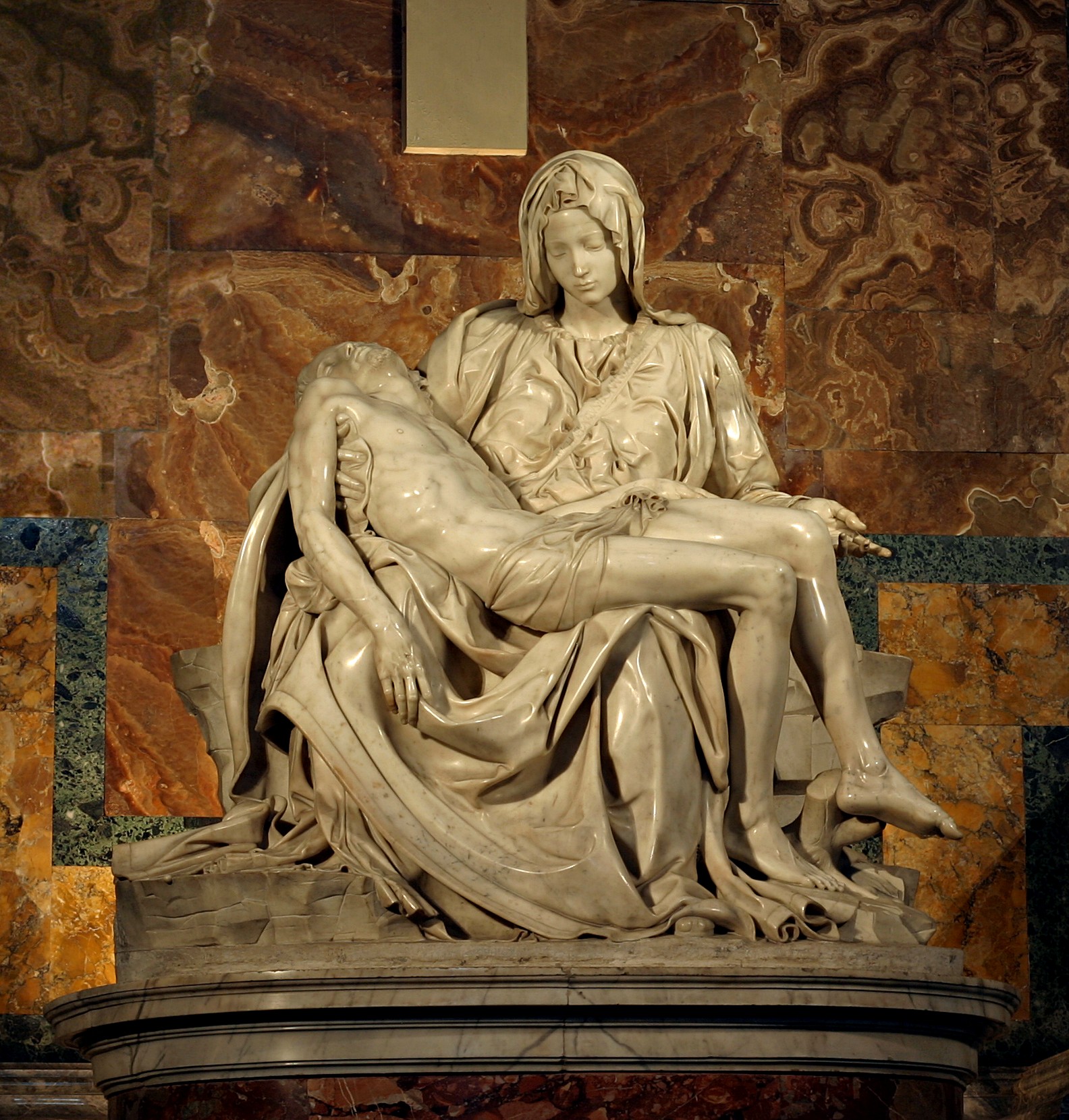
  • Pietà (Michelangelo)

    The Pietà is a work of Renaissance sculpture by Michelangelo Buonarroti, housed in St. Peter’s Basilica, Vatican City. It is the first of a number of works of the same theme by the artist. The statue was commissioned for the French Cardinal Jean de Bilhères, who was a representative in Rome. The sculpture, in Carrara marble, was made for the cardinal’s funeral monument, but was moved to its current location, the first chapel on the north side of the entrance of the basilica, in the 18th century. It is the only piece Michelangelo ever signed. It is also the only known sculpture created by a prominent name from the Renaissance era that was installed in St. Peter’s Basilica that was accepted by the Chapter of St. Peter. This famous work of art depicts the body of Jesus on the lap of his mother Mary after the Crucifixion.

    https://en.wikipedia.org/wiki/Piet%C3%A0_(Michelangelo)
  • The Virgin in Prayer

    Full title: The Virgin in Prayer Artist: Sassoferrato Date made: 1640-50 Source: http://www.nationalgalleryimages.co.uk/ Contact: picture.library@nationalgallery.co.uk Copyright © The National Gallery, London

    Giovanni Battista Salvi da Sassoferrato (August 25, 1609 – August 8, 1685), also known as Giovanni Battista Salvi, was an Italian Baroque painter, known for his archaizing commitment to Raphael’s style. He is often referred to only by the town of his birthplace (Sassoferrato), as was customary in his time, and for example seen with da Vinci and Caravaggio.

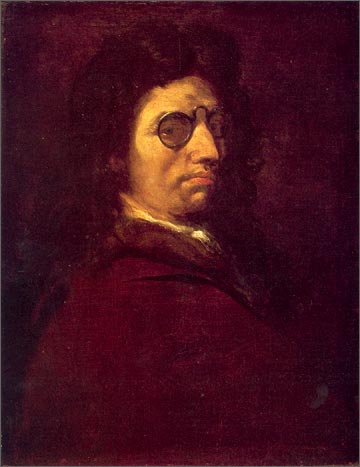
    Self-portrait – Giovanni Battista Salvi da Sassoferrato
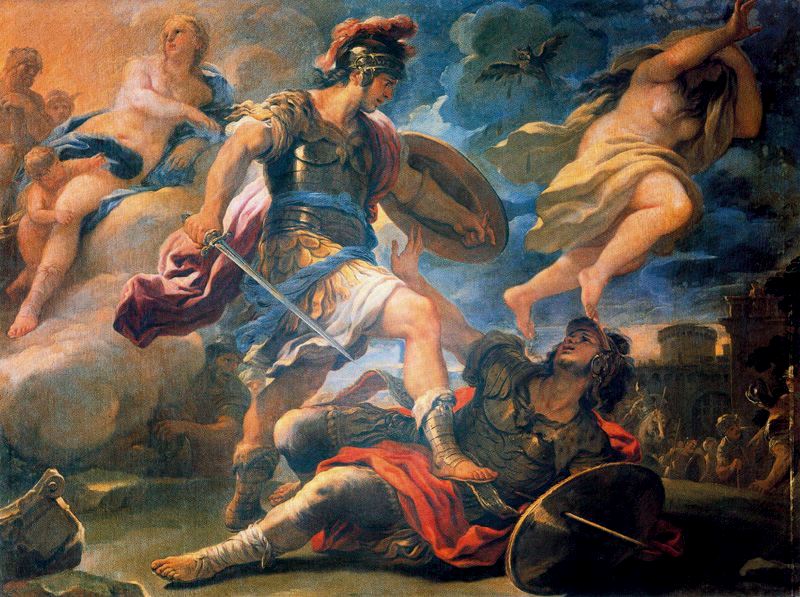
  • Aeneas defeats Turnus

    Aeneas defeats Turnus

    Turnus (Ancient Greek: Τυρρηνός, romanized: Tyrrhênós) was the legendary King of the Rutuli in Roman history, and the chief antagonist of the hero Aeneas in Virgil’s Aeneid. According to the Aeneid, Turnus is the son of Daunus and the nymph Venilia and is brother of the nymph Juturna.

    Luca Giordano (18 October 1634 – 3 January 1705) was an Italian late Baroque painter and printmaker in etching. Fluent and decorative, he worked successfully in Naples and Rome, Florence and Venice, before spending a decade in Spain.

  • Guido Reni’s Michael

    Guido Reni’s Michael (in Santa Maria della Concezione church, Rome, 1636) tramples Satan. A mosaic of the same painting decorates St. Michael’s Altar in St. Peter’s Basilica.

    Michael is an archangel mentioned three times in the Book of Daniel.

    In the New Testament, Michael leads God’s armies against Satan’s forces in the Book of Revelation, where during the war in heaven he defeats Satan. In the Epistle of Jude, Michael is specifically referred to as “the archangel Michael”. Sanctuaries to Michael were built by Christians in the 4th century, when he was first seen as a healing angel. Over time his role became one of a protector and the leader of the army of God against the forces of evil. https://en.wikipedia.org/wiki/Michael_(archangel)

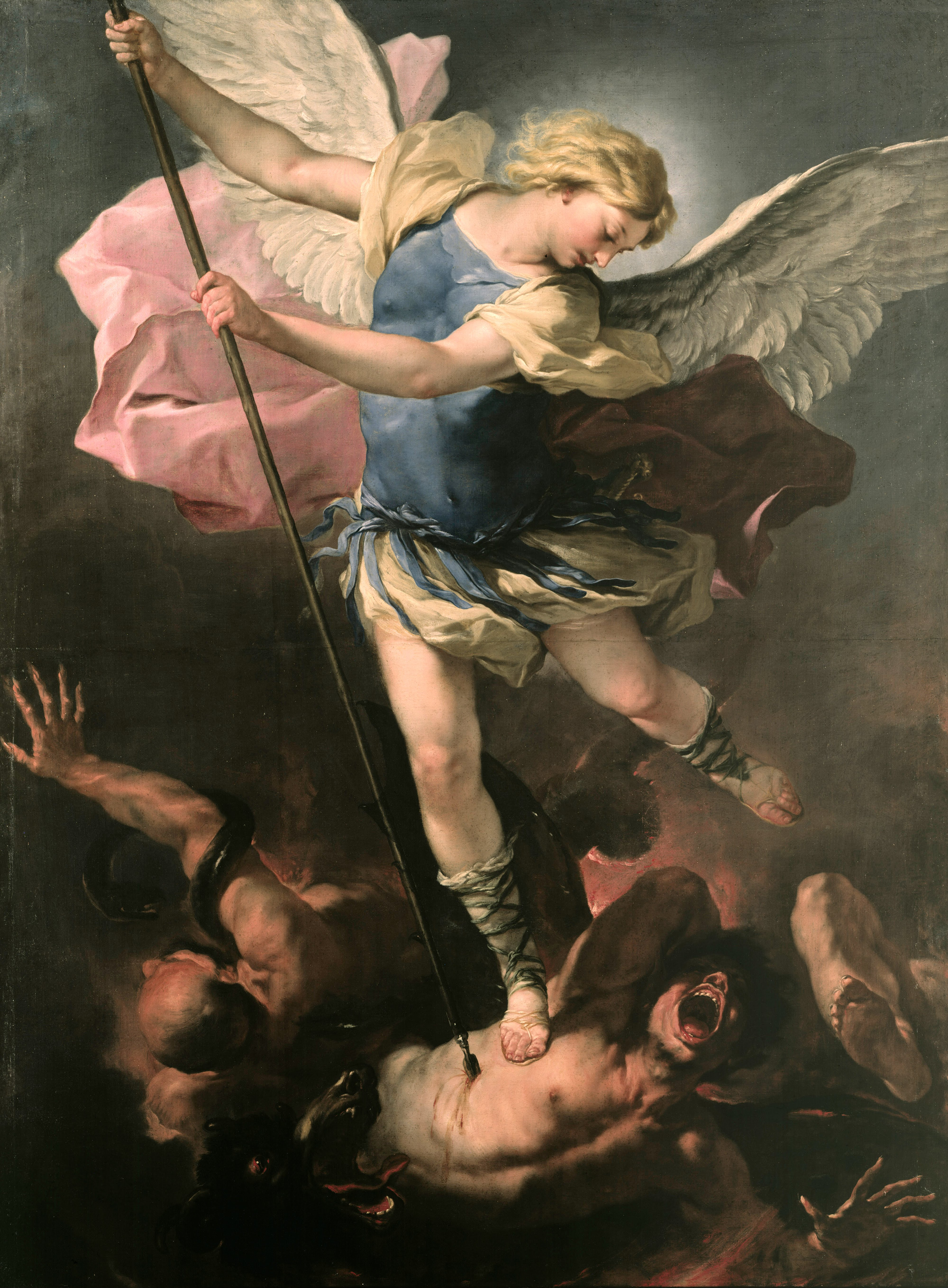
  • St. Michael – Luca Giordano

    Luca Giordano (18 October 1634 – 3 January 1705) was an Italian late Baroque painter and printmaker in etching. Fluent and decorative, he worked successfully in Naples and Rome, Florence and Venice, before spending a decade in Spain. https://en.wikipedia.org/wiki/Luca_Giordano

  • Florence’s smashmouth

    Not art, literature or music but certainly part of Florence’s culture.