Tag: Russia

  • Is it ignorance or some type of deep seated hatred?

    I’m watching John Wick 4, and there’s a character named Killa Harkan who unexpectedly expresses hatred towards Cossacks. Apparently, John Wick is a member of the “Ruska Roma,” also known as Russian Gypsies. The character states that he never trusts Cossacks and refers to them as “dirty people.”

    It appears that the character mistakenly believes that Gypsies and Cossacks are the same ethnic group, which is incorrect.

    Who were the Cossacks?

    The Cossacks were a group of predominantly East Slavic people who historically inhabited the vast territories of the steppe regions of Eastern Europe and parts of Siberia. The term “Cossack” is derived from the Turkic word “kazak,” meaning “adventurer” or “free man.” They were known for their fierce independence, martial skills, and nomadic lifestyle.

    The origins of the Cossacks can be traced back to the 14th and 15th centuries when various groups of people, including runaway serfs, peasants, and refugees, sought freedom and protection on the fringes of the Russian Empire and other neighboring countries. Over time, they formed distinct communities and developed their unique culture, traditions, and social organization.

    The Cossacks played a significant role in the history of Eastern Europe. They often served as a military force and frontier guards, defending the borders of the Russian Empire and its neighboring countries against invasions from nomadic tribes and foreign powers. The Cossacks were known for their excellent horsemanship, military tactics, and their ability to operate in harsh environments, such as the steppes and the Siberian wilderness.

    The Cossacks established their own semi-autonomous communities known as “hosts” or “armies” and were led by elected leaders called “hetmans.” Each host had its specific set of laws, known as the “Cossack Constitution” or “Code,” which governed their internal affairs and relations with the ruling powers.

    Throughout their history, the Cossacks experienced periods of both cooperation and conflict with the Russian Empire. They played a crucial role in the expansion of Russian territories, participated in numerous military campaigns, and were often granted special privileges and land in return for their services. However, tensions and conflicts between the Cossacks and the central authorities also emerged at times, as the Cossacks valued their freedom and autonomy.

    The Cossacks gradually lost their military significance with the modernization of the Russian Empire’s army and the changing political landscape. However, their cultural heritage and traditions continue to be celebrated, and Cossack communities still exist today, primarily in Russia, Ukraine, and other parts of Eastern Europe. The Cossacks are often associated with their distinctive clothing, including fur hats, tall boots, and long coats, as well as their traditional dances, songs, and horseback riding skills.

    Are Cossacks related to Russian Gypsies?

    No, the Cossacks and Russian Gypsies, also known as Roma, are distinct groups with different origins and cultural backgrounds.

    The Cossacks, as mentioned earlier, are predominantly East Slavic people who historically inhabited the steppe regions of Eastern Europe. They have a close connection to the Russian, Ukrainian, and other Slavic cultures. The Cossacks emerged as a distinct social and military group in the 14th and 15th centuries, while their roots can be traced back to various people seeking freedom and protection on the fringes of the Russian Empire.

    On the other hand, the Russian Gypsies, or Roma, are an ethnic group with origins in India. They are believed to have migrated from the Indian subcontinent centuries ago, and their language, Romani, belongs to the Indo-Aryan language family. The Roma people have a unique culture, language, and traditions that are distinct from those of the Cossacks and other Slavic groups.

    While both the Cossacks and Russian Gypsies have contributed to the cultural diversity of Eastern Europe, they are separate and unrelated groups with different historical backgrounds and cultural identities.

    Is it ignorance and lack of education that causes people to think that using the term “Cossack” as an insult sounds cool, or is there some other underlying hatred Hollywood has towards Cossacks that leads to their name being frequently maligned?

     “Cossack” by Vasily Surikov

  • Why all the Cossack hate?

    I’m watching Jack Frost (1979), and in this movie, the main villain is portrayed as a Cossack. It has made me question the portrayal of Cossacks as villains. Weren’t Cossacks considered good guys? I mean, literally good guys? This isn’t the first time I’ve noticed media from the 60s and 70s depicting Cossacks in a negative light. I understand that this period coincided with the Cold War, but instead of simply criticizing Russians, why did they specifically target a relatively small and lesser-known group like the Cossacks? Was it due to ignorance, with Hollywood finding the name ‘Cossack’ appealing, or was there another reason behind it?

    One possible explanation could be the Cossacks’ resistance against the Bolsheviks. It can be argued that the defeat of the Cossacks and the White Russian Army by the Red Russian Army directly contributed to the Holodomor famine and the tragic loss of up to 10 million Ukrainian lives.

    A couple of takeaway points from Wikipedia about the Cossacks – 

    “The Cossacks[a] are a group of predominantly East Slavic Orthodox Christian people who became known as members of democratic, self-governing, semi-military communities originating in the steppes of Eastern Europe (in particular the Dnieper, in the Wild Fields).[1] They inhabited sparsely populated areas and islands in the lower Dnieper,[2] Don, Terek, and Ural river basins, and played an important role in the historical and cultural development of both Ukraine and Russia.[3][4]

    https://en.wikipedia.org/wiki/Cossacks

    By the 18th century, Cossack hosts in the Russian Empire occupied effective buffer zones on its borders. The expansionist ambitions of the Empire relied on ensuring Cossack loyalty, which caused tension given their traditional exercise of freedom, democracy, self-rule, and independence. Cossacks such as Stenka Razin, Kondraty Bulavin, Ivan Mazepa, and Yemelyan Pugachev led major anti-imperial wars and revolutions in the Empire in order to abolish slavery and harsh bureaucracy and to maintain independence. The empire responded with executions and tortures, the destruction of the western part of the Don Cossack Host during the Bulavin Rebellion in 1707–1708, the destruction of Baturyn after Mazepa’s rebellion in 1708,[b] and the formal dissolution of the Lower Dnieper Zaporozhian Host after Pugachev’s Rebellion in 1775. 

    https://en.wikipedia.org/wiki/Cossacks

    During the Russian Civil War, Don and Kuban Cossacks were the first people to declare open war against the Bolsheviks. In 1918, Russian Cossacks declared their complete independence, creating two independent states: the Don Republic and the Kuban People’s Republic, and the Ukrainian State emerged. Cossack troops formed the effective core of the anti-Bolshevik White Army, and Cossack republics became centers for the anti-Bolshevik White movement. With the victory of the Red Army, Cossack lands were subjected to decossackization and the Holodomor famine. As a result, during the Second World War, their loyalties were divided and both sides had Cossacks fighting in their ranks.

    https://en.wikipedia.org/wiki/Cossacks

    Side note – “Zaporozhian Cossacks write to the Sultan of Turkey” by Ilya Repin is one of my favorite pieces of art.

    “Zaporozhian Cossacks write to the Sultan of Turkey” by Ilya Repin (1844–1930)

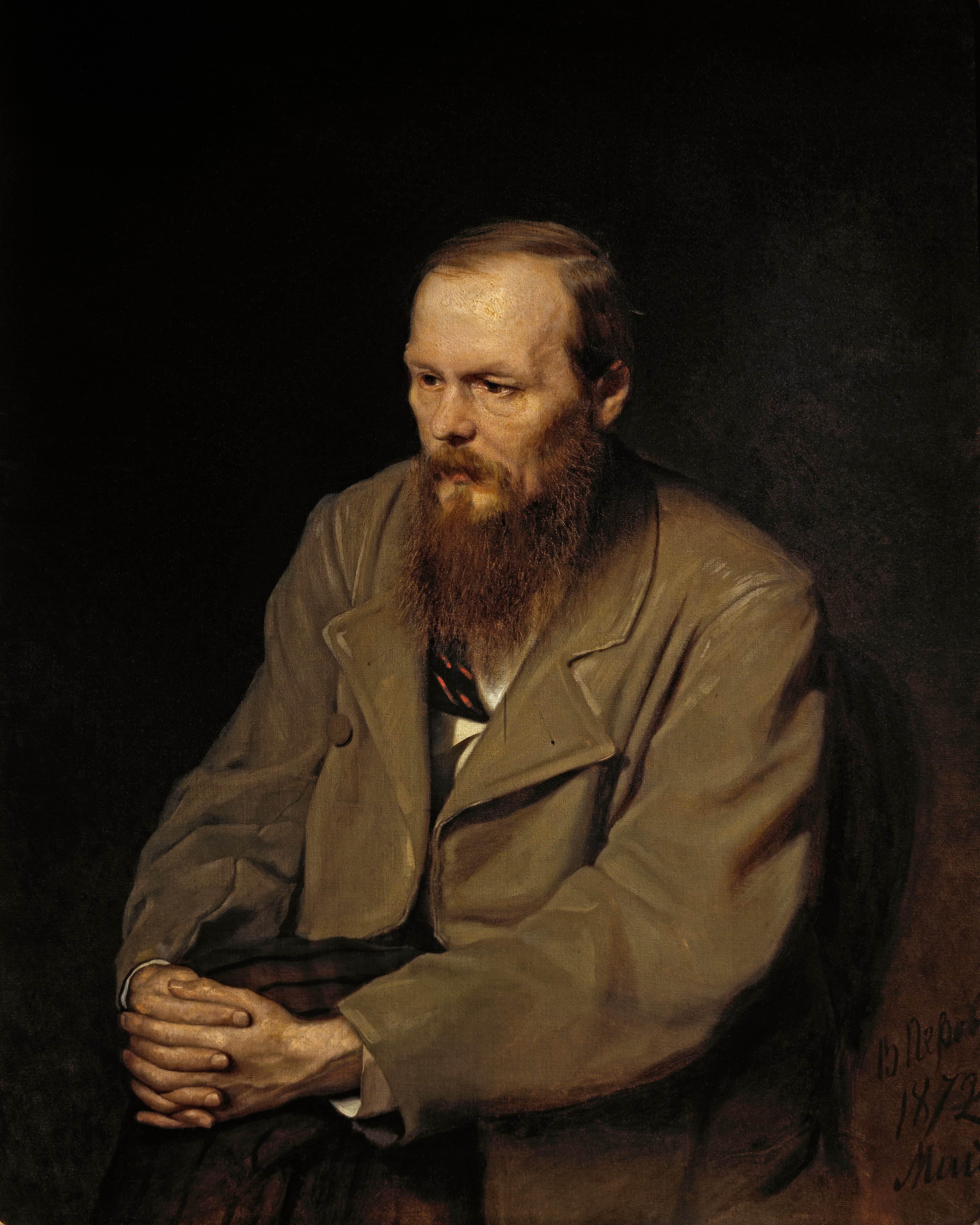
  • Beauty will save the world – Dostoevsky

    “One day Dostoevsky threw out the enigmatic remark: “Beauty will save the world”. What sort of a statement is that? For a long time I considered it mere words. How could that be possible? When in bloodthirsty history did beauty ever save anyone from anything? Ennobled, uplifted, yes – but whom has it saved?

    There is, however, a certain peculiarity in the essence of beauty, a peculiarity in the status of art: namely, the convincingness of a true work of art is completely irrefutable and it forces even an opposing heart to surrender. It is possible to compose an outwardly smooth and elegant political speech, a headstrong article, a social program, or a philosophical system on the basis of both a mistake and a lie. What is hidden, what distorted, will not immediately become obvious.

    Then a contradictory speech, article, program, a differently constructed philosophy rallies in opposition – and all just as elegant and smooth, and once again it works. Which is why such things are both trusted and mistrusted.

    In vain to reiterate what does not reach the heart.

    But a work of art bears within itself its own verification: conceptions which are devised or stretched do not stand being portrayed in images, they all come crashing down, appear sickly and pale, convince no one. But those works of art which have scooped up the truth and presented it to us as a living force – they take hold of us, compel us, and nobody ever, not even in ages to come, will appear to refute them.

    So perhaps that ancient trinity of Truth, Goodness and Beauty is not simply an empty, faded formula as we thought in the days of our self-confident, materialistic youth? If the tops of these three trees converge, as the scholars maintained, but the too blatant, too direct stems of Truth and Goodness are crushed, cut down, not allowed through – then perhaps the fantastic, unpredictable, unexpected stems of Beauty will push through and soar to that very same place, and in so doing will fulfil the work of all three?

    In that case Dostoevsky’s remark, “Beauty will save the world”, was not a careless phrase but a prophecy? After all he was granted to see much, a man of fantastic illumination.

    And in that case art, literature might really be able to help the world today?”
    — Aleksandr Solzhenitsyn (Nobel Lecture)

  • Alexander Litovchenko’s “Charon carries souls across the river Styx”

    Charon, the ferryman of the dead in Greek mythology, shown in this nineteenth-century painting by Alexander Litovchenko.

    In Greek mythology and Roman mythology, Charon or Kharon is a psychopomp, the ferryman of Hades who carries souls of the newly deceased across the river Styx that divided the world of the living from the world of the dead. A coin to pay Charon for passage, usually an obolus or danake, was sometimes placed in or on the mouth of a dead person. Some authors say that those who could not pay the fee, or those whose bodies were left unburied, had to wander the shores for one hundred years, until they were allowed to cross the river.

    Alexander Dmitrievich Litovchenko was a Ukrainian-born Russian painter who specialized in depicting Muscovite Russia of the 16th and 17th centuries.

  • Among the waves

    Among the waves – Ivan Aivazovsky


  • Reply of the Zaporozhian Cossacks – Ilya Repin

    The Zaparozhye Cossacks Writing a Mocking Letter to the Turkish Sultan *oil on canvas *358 × 203 cm *signed b.c.: И.Репин 1880-91
  • Christ in the Desert

    Christ in the Desert, or Christ in the Wilderness by Russian artist Ivan Kramskoi, reflecting the Fasting of Christ. 1872


  • Picture as a souvenir

    by Pavel Ryzhenko
    Picture as a souvenir, 2007
    Oil on canvas

    ryzhenkov_pavel_viktorovich_7_triptych_the_russian_century_picture_as_a_souvenir_2007

    Full size