-
The Fathers and the Schoolmen
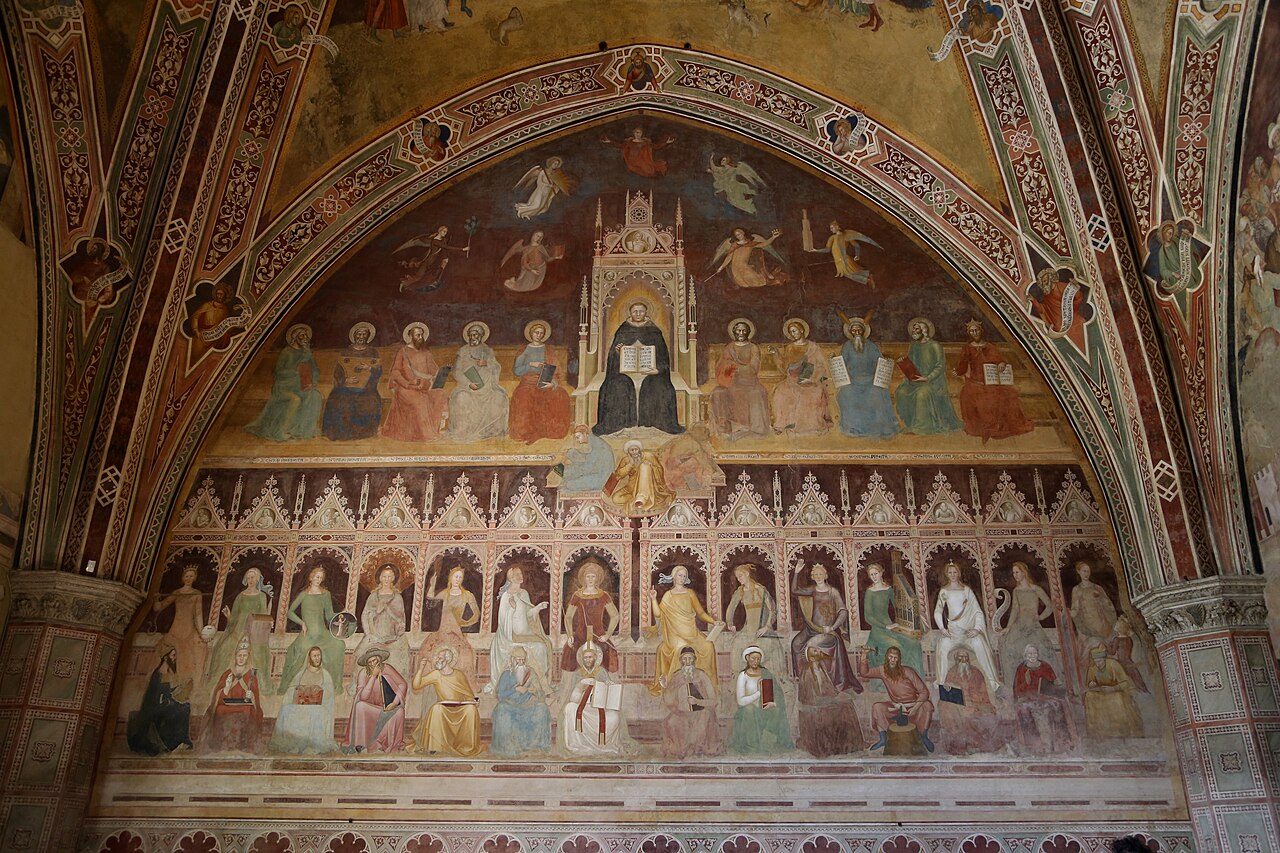
The Church Fathers and the Schoolmen on one shelf: Eusebius and Athanasius, Augustine against Pelagius, Anselm and Aquinas, Bernard and à Kempis.
-
Beauty vs brutalism
Dome of the central rotunda lined with statues of the Muses in the Gould Memorial Library at Bronx Community College. The architect, Stanford White (1853-1906), was inspired by the Roman Pantheon.
-
Arnold Bocklin’s Polyphemus
Böcklin’s original training as a landscape painter shines through in this unconventional interpretation of an episode from the ancient Greek epic poem the Odyssey. Crashing waves meet jagged rocks in a spray and scurry of foam. Escaping from the island of the Cyclopes—one-eyed, ill-tempered giants—the hero Odysseus calls back to the shore, taunting the Cyclops Polyphemus, who heaves…
-
Alexander Litovchenko’s “Charon carries souls across the river Styx”
In Greek mythology and Roman mythology, Charon or Kharon is a psychopomp, the ferryman of Hades who carries souls of the newly deceased across the river Styx that divided the world of the living from the world of the dead. A coin to pay Charon for passage, usually an obolus or danake, was sometimes placed…
-
Guido Reni’s Michael
Michael is an archangel mentioned three times in the Book of Daniel. In the New Testament, Michael leads God’s armies against Satan’s forces in the Book of Revelation, where during the war in heaven he defeats Satan. In the Epistle of Jude, Michael is specifically referred to as “the archangel Michael”. Sanctuaries to Michael were…
-
Teach positive origin myths
“Since it is so likely that (children) will meet cruel enemies, let them at least have heard of brave knights and heroic courage. Otherwise you are making their destiny not brighter but darker.” ― C.S. Lewis
-
King Lear and the Fool in the Storm
William Dyce 19 September 1806 in Aberdeen – 14 February 1864) was a Scottish artist, who played a part in the formation of public art education in the United Kingdom, and the South Kensington Schools system. (Wikipedia) King Lear is a tragedy written by William Shakespeare. It tells the tale of a king who bequeaths…
-
It is not the critic who counts.
“It is not the critic who counts; not the man who points out how the strong man stumbles, or where the doer of deeds could have done them better. The credit belongs to the man who is actually in the arena, whose face is marred by dust and sweat and blood; who strives valiantly; who…
-
Macbeth and Banquo meeting the witches on the heath
by Théodore Chassériau