Needless to say, spoilers.
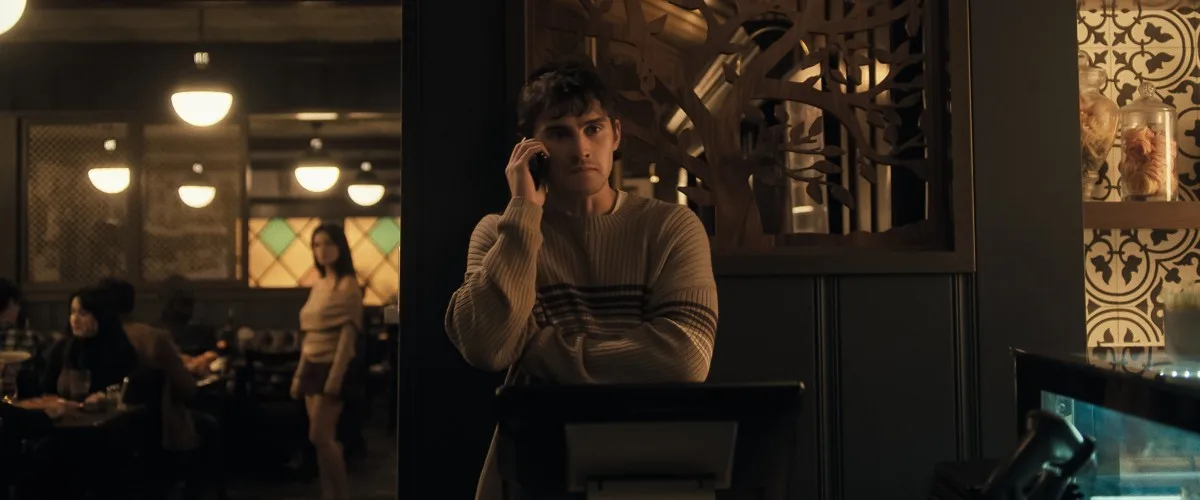
The first thing that struck me was the name. Our protagonist is called Bear, short for Baron, and no name in the film is more ironic. A baron is a lord, a man with dominion; a bear is a creature of strength. The young man who carries both names has neither. He cannot master so much as his own fear. He should have been named Mouse.
I watched Obsession last night and came away impressed. It is not flawless, but it is genuinely effective: creepy, tense, and more morally serious than I expected. What follows is all spoiler, so if you mean to see it, come back afterward.
The premise is almost a fairy tale, which suits it, because the whole story runs on the logic of the old cautionary tales. Bear is in love with his childhood friend Nikki but too frightened to say so. On a whim he buys a novelty trinket (a “One Wish Willow”) and, in a moment of cowardice dressed up as longing, wishes that Nikki would love him more than anyone in the world. The wish is granted in the cruelest possible way. Something takes hold of her; the woman he loved is displaced by an obsessive counterfeit, while the real Nikki is left trapped and screaming inside her own body. From there the story descends, as these stories do, toward blood.
What held me was not the horror on the surface but what the horror is about. Beneath the possession and the violence, Obsession is a picture of moral disorder working itself out to its end. And the crucial thing to see is that the disorder is nearly complete before a single supernatural event occurs. The wish is only the accelerant. The fire was long since laid.
Consider Ian. He plays the loyal friend, coaching Bear on how to win Nikki, even feeding him the cruel nickname she has hated since childhood. All the while he has been sleeping with her, on and off, for two years. This puts him in a vise of his own making, and both jaws condemn him. Either he is deliberately setting Bear up to fail, a quiet cruelty toward the friend who trusts him, or he holds Nikki so cheaply that he will hand her off to another man without a second thought, like a used thing he is finished with. The film gives us reason to believe both at once. There is no reading of Ian that comes out clean.
Consider Nikki, too, and here I want to resist the tidy verdict that she is merely the blameless victim of the piece. It is true, and it matters, that she is not answerable for the possession or the killings; those are the bitter fruit of Bear’s wish, worked through her and against her will, and I will not lay them at her feet. But to stop there, to pronounce her innocent and close the book, is not charity. It is a refusal to take her seriously as a person.
For she is a person, which is to say a moral agent, and moral agents make choices that carry weight. Long before any Willow was snapped, Nikki had given two years to a casual, secret arrangement with Ian: holding herself cheaply, and letting herself be held cheaply, by a man who prized her so little he was ready to pass her along. That is not nothing. It is a real disorder, freely entered, and it is part of the tinder the wish set alight. To pretend she had no hand in the world that took shape around her is to treat her not as a woman but as a prop, a thing that suffers and never acts. The genuinely diminishing reading is the one that spares her all responsibility, for it spares her by emptying her of agency.
I do not say this to stand over her from some clean height. No head in this story is spotless, nor, God knows, is mine. I say it because a serious moral vision does not sort people into pure victims and pure villains. It grants that each of them carried something into the fire: Bear his cowardice, Ian his treachery, Nikki her carelessness with herself and with others. She was wronged, gravely. She was also not without fault. Both are true at once, and a story this honest asks us to hold them together rather than flinch from the harder half.
This is the heart of it. The wish itself is the original sin of the film, and it is worth naming plainly. Bear does not merely want to be loved; he wants to compel love, to override another will and bend it to his desire. That is the ancient shape of sin: the refusal to receive a thing as gift, and the grasping after it as possession instead. Love that is coerced is not love, and the film is honest enough to show that the counterfeit Bear receives is a horror precisely because it was not freely given. He gets exactly what he asked for, and it destroys him.
And here the story does something I did not expect: it lets the innocent suffer, and suffer worst. The one genuinely innocent figure in the whole affair is Sarah, the friend who carries no duplicity, who is honest about her own affections, who tries to tell Bear the truth about what has been done to him. For that honesty she is killed by the thing wearing Nikki’s face. And the film reserves for her its sharpest irony: even in death she is not let be. Her body is posed and made into set-dressing while the thing that killed her puts on her clothes and remakes itself in her image. The particulars are uglier than I care to set down here, but the point lingers: the one person in the story who behaved throughout as a person, who told the truth and cared honestly, is in the end reduced to an object. Moral disorder, once loosed, does not confine its damage to the guilty. It falls hardest, often, on the one who did least to deserve it. And it has a particular appetite for making things out of souls, which is, when you look closely, the sin at the root of the whole film. Bear wished to possess a person. Ian used one and discarded her. Sarah is the end of that road, a person turned entirely into a thing.
The ending seals the whole design. Desperate, Bear brings a Willow to Ian and begs him to wish the curse away, to save both Bear and Nikki. Ian, who does not believe and would not much care if he did, wishes instead for a billion dollars. The money rains down from the ceiling, proving the magic real in the same instant it proves Ian’s heart. He is dead minutes later, killed by Nikki, never to spend a cent. Each man, in the end, receives the wish that fits his disorder. Bear’s coerced love damns him; Ian’s naked greed leaves him a corpse atop a heap of useless money. The wages come due, and they are paid in full.
This is one of the things good horror can do better than any other genre. It takes the quiet sins we are all tempted to excuse (cowardice, compromise, lust, deceit, obsession, selfishness) and follows them to the end of the road, magnifying them until we can no longer pretend they are harmless. The horror is not laid over the moral vision from outside. It is the moral vision made visible.
I will admit the film is not perfect. But it is effective, and more thoughtful than I expected walking in. Which leaves me with the question I keep returning to as I get older: do storytellers intend their work to become morality plays, or have I simply reached an age where I read everything through that lens? Some of both, I suspect. And for what it is worth, I was not alone in seeing it, since more than one reviewer reached for the language of morality fables to describe the film. But I think the lens is worth keeping regardless. Whatever a maker intends, a story that shows sin bearing its true fruit is telling the truth about the world. And the truth, even in a horror film, is worth attending to.
Leave a Reply