No Country for Old Men and the wisdom of Ed Tom Bell.

In the realm of literary journeys, “No Country for Old Men” by Cormac McCarthy stands apart as a triumph that even rivals the film adaptation. “No Country for Old Men” secures its place as my favorite McCarthy book.

Ed Tom Bell, a character from “No Country for Old Men,” embodies a profound wisdom that resonates deeply with readers. His introspective musings on life, morality, and the changing world around him offer a unique perspective that lingers in the mind long after the book is finished. Bell’s quiet contemplation serves as a guiding light, reminding us to question our values and ponder the consequences of our actions. Through his words, we are encouraged to confront the complexities of our existence and navigate the moral ambiguities of a rapidly evolving society. Ed Tom Bell’s wisdom is a testament to the power of introspection and serves as a beacon of insight for those willing to listen

“I read in the papers here a while back some teachers come across a survey that was sent out back in the thirties to a number of schools around the country. Had this questionnaire about what was the problems with teachin in the schools. And they come across these forms, they’d been filled out and sent in from around the country answer in these questions. And the biggest problems they could name was things like talkin in class and runnin in the hallways. Chewin gum. Copyin homework. Things of that nature. So they got one of them forms that was blank and printed up a bunch of em and sent em back out to the same schools. Forty years later. Well, here come the answers back. Rape, arson, murder. Drugs. Suicide. So I think about that. Because a lot of the time ever when I say anything about how the world is goin to hell in a handbasket people will just sort of smile and tell me I’m gettin old. That it’s one of the symptoms. But my feelin about that is that anybody that cant tell the difference between rapin and murderin people and chewin gum has got a whole lot bigger of a problem than what I’ve got. Forty years is not a long time neither. Maybe the next forty of it will bring some of em out from under the ether. If it aint too late.

Here a year or two back me and Loretta went to a conference in Corpus Christi and I got set next to this woman, she was the wife of somebody or other. And she kept talkin about the right wing this and the right wing that. I aint even sure what she meant by it. The people I know are mostly just common people. Common as dirt, as the sayin goes. I told her that and she looked at me funny. She thought I was sayin somethin bad about em, but of course that’s a high compliment in my part of the world. She kept on, kept on. Finally told me, said: I dont like the way this country is headed. I want my granddaughter to be able to have an abortion. And I said well mam I dont think you got any worries about the way the country is headed. The way I see it goin I dont have much doubt but what she’ll be able to have an abortion. I’m goin to say that not only will she be able to have an abortion, she’ll be able to have you put to sleep. Which pretty much ended the conversation.”

Ed Tom Bell. No Country for Old Men

No Apologies: Why Civilization Depends on the Strength of Men

In his book “No Apologies,” Anthony Esolen argues that traditional masculinity is under attack in our modern society. He contends that men are being told to apologize for their strength, drive, and ambition. Esolen believes this trend is dangerous and emphasizes the need for men to reclaim their masculinity.

To support his argument, Esolen presents a wealth of evidence, drawing on history, philosophy, and literature to demonstrate men’s historical roles as builders and protectors of civilization. He utilizes various sources, including the Bible, history, and philosophy, to strengthen his case.

Esolen further argues that the modern world is endangered due to the loss of respect for traditional masculinity. He suggests that men are now encouraged to be weak and passive, which he believes leads to the decline of civilization. He urges men to reclaim their masculinity and stand up for what is right.

The biblical concept of manhood is cited by Esolen, who emphasizes that Jesus served as a leader and role model for men, embodying qualities such as strength, courage, compassion, and wisdom.

Esolen then delves into the history of manhood, asserting that men have always been leaders in civilization and have made significant contributions to society. He provides examples such as Alexander the Great, Michelangelo, and George Washington to support his claim.

“No Apologies” is recommended for those concerned about the future of masculinity. Esolen presents a powerful and persuasive argument for why men should take pride in their masculinity without feeling the need to apologize for it.

In addition to being recommended reading for men, “No Apologies” is a must-read for parents raising sons. The book offers valuable insights into the nature of masculinity, helping parents raise their sons to become strong, confident, and responsible men.

If you are raising a son, I highly recommend reading “No Apologies.” This thought-provoking book challenges prevailing attitudes toward masculinity and equips parents with the necessary tools to raise their sons as men capable of making a positive impact on the world.

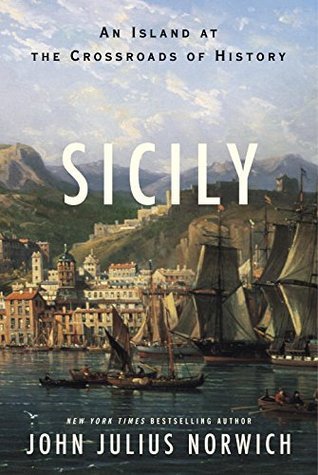
Sicily: An Island at the Crossroads of History

My current read.

Critically acclaimed author John Julius Norwich weaves the turbulent story of Sicily into a spellbinding narrative that places the island at the crossroads of world history.

“Sicily,” said Goethe, “is the key to everything.” It is the largest island in the Mediterranean, the stepping-stone between Europe and Africa, the link between the Latin West and the Greek East. Sicily’s strategic location has tempted Roman emperors, French princes, and Spanish kings. The subsequent struggles to conquer and keep it have played crucial roles in the rise and fall of the world’s most powerful dynasties.

Yet Sicily has often been little more than a footnote in books about other empires. John Julius Norwich’s engrossing narrative is the first to knit together all of the colorful strands of Sicilian history into a single comprehensive study. Here is a vivid, erudite, page-turning chronicle of an island and the remarkable kings, queens, and tyrants who fought to rule it. From its beginnings as a Greek city-state to its emergence as a multicultural trading hub during the Crusades, from the rebellion against Italian unification to the rise of the Mafia, the story of Sicily is rich with extraordinary moments and dramatic characters. Writing with his customary deftness and humor, Norwich outlines the surprising influence Sicily has had on world history—the Romans’ fascination with Greek civilization dates back to their sack of Sicily—and tells the story of one of the world’s most kaleidoscopic cultures in a galvanizing, contemporary way.

This volume has been a long time coming—Norwich began to explore Sicily’s colorful history during his first visit to the island in the early 1960s. The dean of popular historians leads his readers through the millennia with the steady narrative hand of a master teacher or the world’s most learned tour guide. Like the island itself, Sicily is a book brimming with bold flavors that begs to be revisited again and again.

Praise for Sicily

“Suavely readable . . . The very model of a popular historian, [Norwich] writes to give pleasure to the common reader. And what pleasure it is.”The Wall Street Journal

“Entertaining on every page . . . There is something ancient and sorrowful in Sicily, ‘some dark, brooding quality,’ just as captivating as its spellbinding history or its beautiful and varied landscapes, from beaches to lemon groves, pine forests to volcanoes. . . . The most amiable and freewheeling of guides, Norwich will always find time for the amusing anecdote.”The Sunday Times

“Utterly engrossing . . . written with passion about the art and architecture of this magical island, filled with gossipy tidbits and sweeping historical theories.”The Daily Beast

“Dazzling . . . Norwich is an elegantly graceful and entertaining storyteller.”Richmond Times-Dispatch

“Charming . . . richly nuanced history relayed with enormous fondness.”Kirkus Reviews

“A brisk and always-lively tour.”Open Letters Monthly

“Norwich is deeply in love with Sicily. [His] boundless affection has inspired a determined effort to understand its painful past. The result is impressionistic, as love often is.” —The Times

“Norwich sketches personalities vividly. . . . He does the island and the reader a generous service in providing such an amiable introduction.”The Sunday Telegraph

“Norwich tells [Sicily’s] long, sad but fascinating story with sympathy and brio.”Literary Review